

Architectural marvels of honey bees and social wasps
Honey bees and social wasps developed a similar solution for nest building although evolution separated them 179 million years ago.
University of Konstanz
If you present social insect biologist Michael L Smith a picture of a honey bee or social wasp comb, he can explain in great detail how the insects fix architectural problems of irregular cell sizes. No wonder, since he and his research team examined photos of 22,745 cells of several species of honey bees and social wasps with a semi-automated method.
“Independently honey bees and social wasps evolved the ability to build hexagonal cells”, says Michael L Smith, affiliate member at the Max Planck Institute of Animal Behavior and the Cluster of Excellence Collective Behaviour and currently professor at Auburn University. There are a few differences such as that bees build with wax, social wasps with paper. Bees build double-sided combs that hang vertically, whereas wasps build single-sided combs that hang horizontally.
- Photos of honeycombs are published in our online-magazine campus.kn.
But why does an architectural problem occur? “However, not all animals in the swarm are the same size”, says Smith. The reproductives can vary in how much bigger they are than the workers. “In some species, it is a small difference, in others, the reproductives are much bigger – and so need a bigger cell to be reared within”, explains Smith.
Predicting the architectural solution
The insects solve the problem of irregular cell size with non-hexagonal cells, which are paired in predictable ways. The most common irregularity is pairs of 5- and 7-sided cells, as the researchers investigated. “We think it’s because there’s a fundamental geometry and perhaps construction method, that results in the particular pairing of non-hexagonal cells”, outlines Michael L Smith. “What's also interesting is that the 5-sided cell is always on the worker-side of the transition, and the 7-side cell is on the reproductive side”, says Smith.
The research team knew that all the species were going to have to ‘fix’ this problem in some way: “But when we saw that they are all pretty much doing the exact same thing, with some minor variations, that was really exciting”, remembers Smith. “If someone found a totally new species and told us how big the worker and reproductive cells are, we could predict how they would fix that architectural problem, and which ‘tricks’ the insects would use. This would also likely apply to other hexagonal structures, even beyond the social insects.”
The study was possible due to a network of collaborators across the world, who either had photographs of nests from previous work, or were able to get additional photographs.
Application options
Hexagonal arrays are used in many contexts, like the wings of airplanes. “The hexagon is a particularly useful shape because it's lightweight, strong, and flexible”, says Smith. “But in some cases, you might want one size of hexagon in one place, and a different sized hexagon in another place for example because one spot needs to be more rigid than another. Currently, the way we fix that architectural problem is just putting a large metal brace on it. Well, the bees and wasps have shown us how this can be done in a smarter way.”
Key facts
- Michael L. Smith, Kevin J. Loope, Bajaree Chuttong, Jana Dobelmann, James C. Makinson, Tatsuya Saga, Kirstin H. Petersen, Nils Napp: Honey bees and social wasps reach convergent architectural solutions to nest-building problems, PLOS Biology, 2023, https://doi.org/10.1371/journal.pbio.3002211
- Michael L Smith is an Affiliate Member of the Max Planck Institute of Animal Behavior, and an Assistant Professor at Auburn University. His lab focuses on nest architecture and colony organization in the social insects. During his research time in Konstanz he investigated with a grant from the Cluster of Excellence Collective Behaviour that social wasps and honey bees uses similar nest building solutions.
Note to editors:
You can download photos here:

Caption: Honey bees and social wasps solve building problems with the same architectural tricks, including non-hexagonal cells, and intermediate-sized cells. Clockwise from top center: Apis mellifera (photo by Michael L. Smith), Vespula flavopilosa (photo by Kevin J. Loope), Apis andreniformis (photo by James C. Makinson), Vespula shidai (photo by Tatsuya Saga), Metapolybia mesoamerica (photo by Kevin J. Loope), Apis florea (photo by Bajaree Chuttong).
2. https://www.uni-konstanz.de/fileadmin/pi/fileserver/2023_EXSTRA/architektonische/querschnitt.jpg
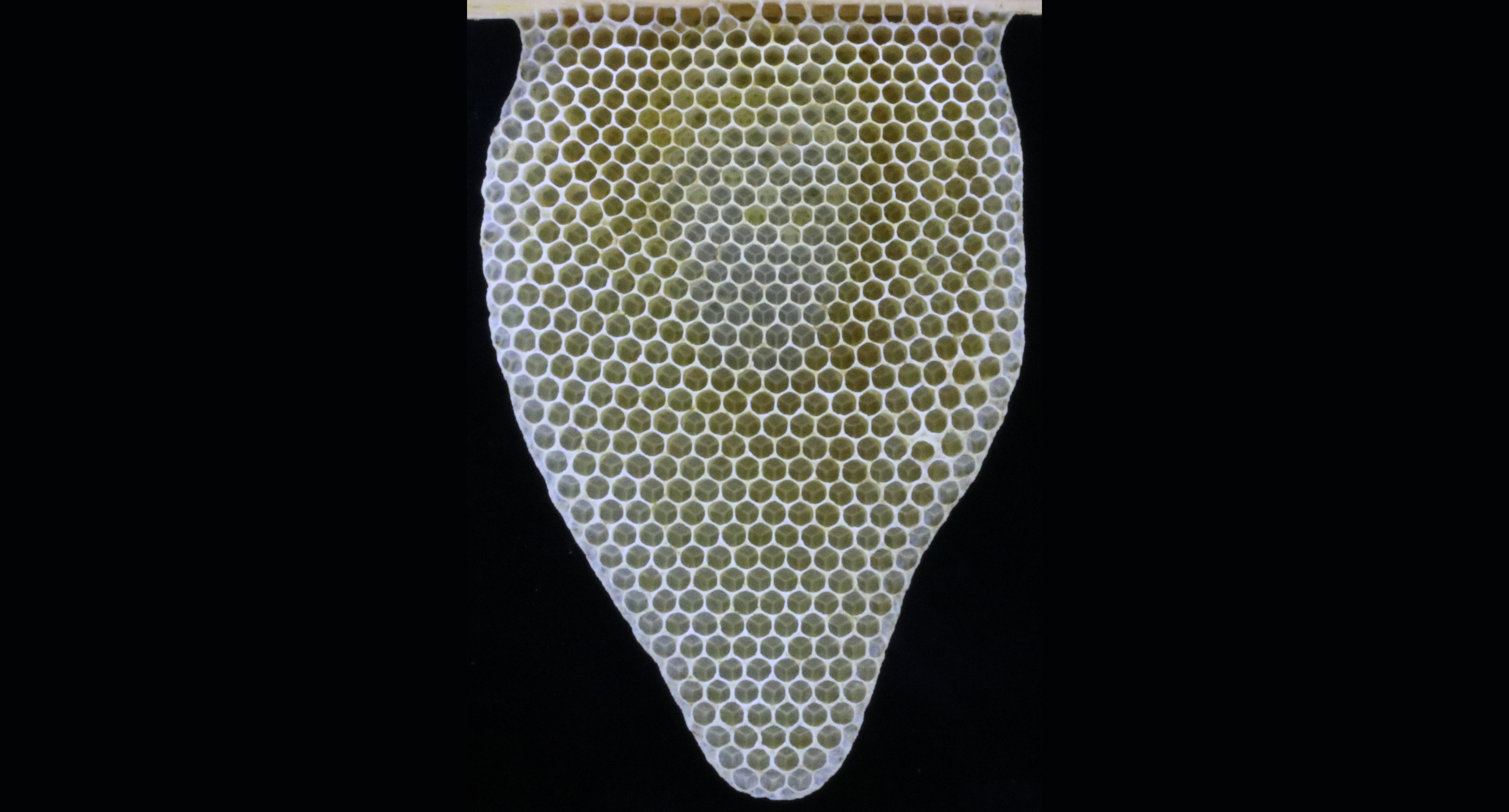
Caption: Cross section of a nest of Apis mellifera (European Honey Bee / Western Honey Bee).
Copyright: Michael L Smith
3.https://www.uni-konstanz.de/fileadmin/pi/fileserver/2023_EXSTRA/architektonische/cerana.jpg
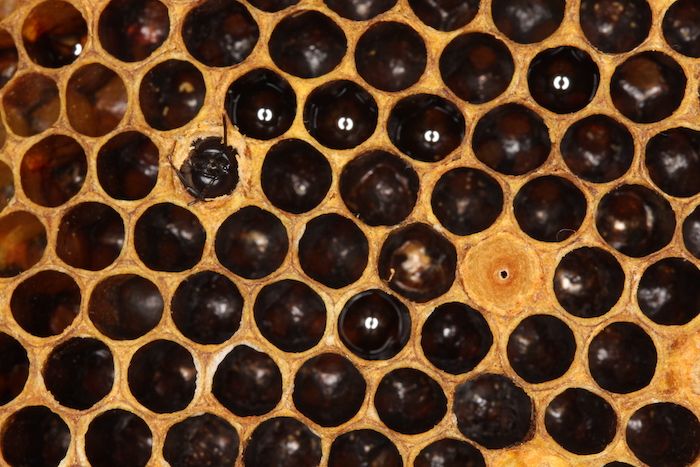
Caption: Honeycomb of Apis cerana
Copyright: Michael L Smith
4.https://www.uni-konstanz.de/fileadmin/pi/fileserver/2023_EXSTRA/architektonische/Smith.jpg
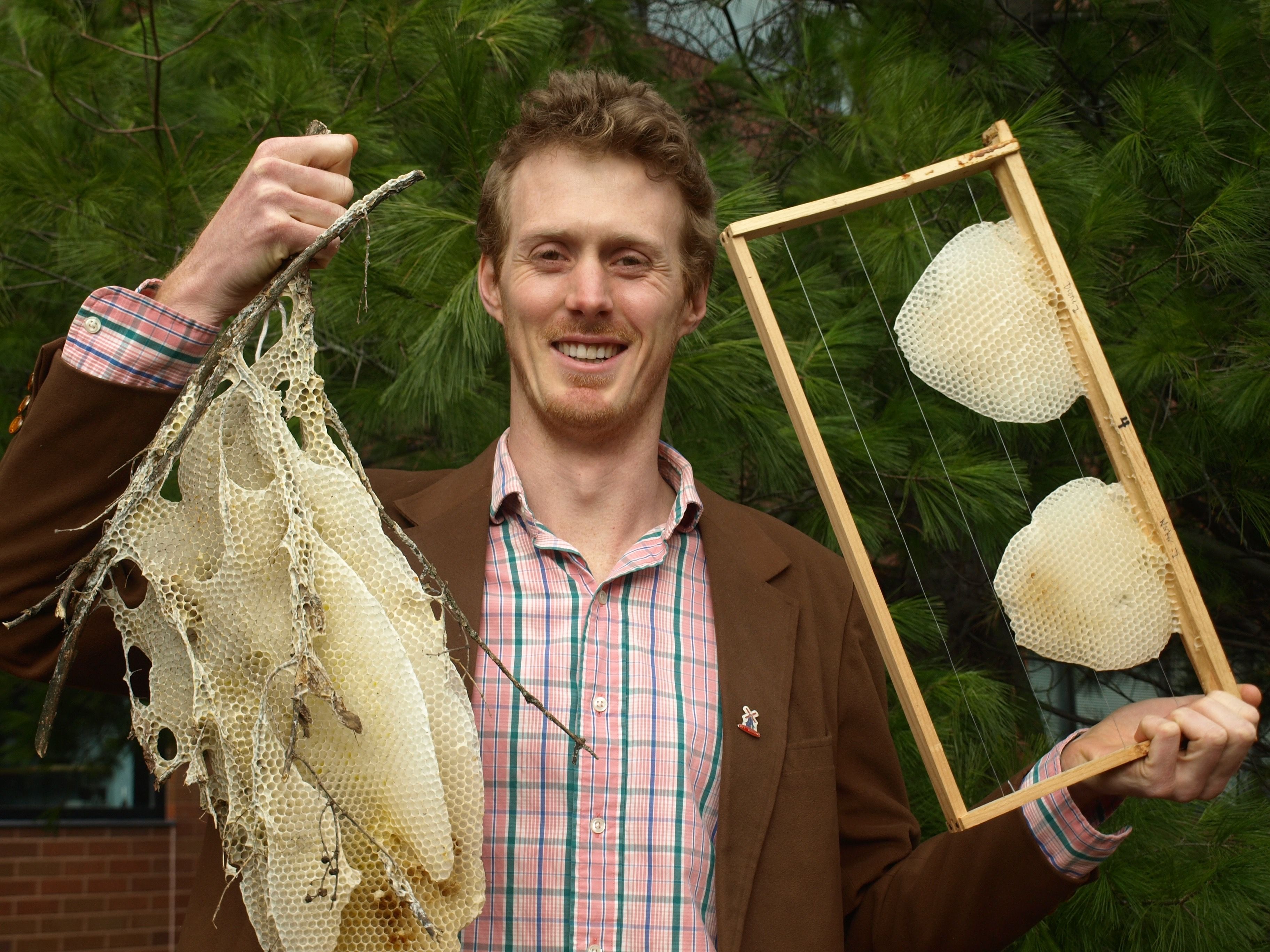
Caption: Michael L Smith, Affiliate Member of the Max Planck Institute of Animal Behavior, and an Assistant Professor at Auburn University.
Copyright: Michael L Smith
Disclaimer: AAAS and EurekAlert! are not responsible for the accuracy of news releases posted to EurekAlert! by contributing institutions or for the use of any information through the EurekAlert system.